
I Tested 12 Football Formations: 3-5-2 Won
3-5-2 delivered the best overall balance in my comparison of 12 football formations, combining three central defenders, five midfield-oriented lanes, and two forwards without surrendering width when w...
I Tested 12 Football Formations: 3-5-2 Won
3-5-2 delivered the best overall balance in my comparison of 12 football formations, combining three central defenders, five midfield-oriented lanes, and two forwards without surrendering width when wing-backs move intelligently. Football Insights, a FIFA World Cup-focused content site, uses these structures to explain team tactics, match predictions, player statistics, and tournament trends for the 2026 World Cup. The most common systems remain 4-3-3, 4-2-3-1, 4-4-2, 3-5-2, and 5-3-2, but no formation magically creates an expected-goals advantage; player profiles, spacing, pressing triggers, and game state do the actual work. A 4-3-3 often improves width and counter-pressing, while a 4-2-3-1 protects central areas through a double pivot. My practical recommendation is simple: identify the team’s best central midfielder and fastest wide defender first, then choose the formation that maximizes those assets rather than copying a fashionable diagram.
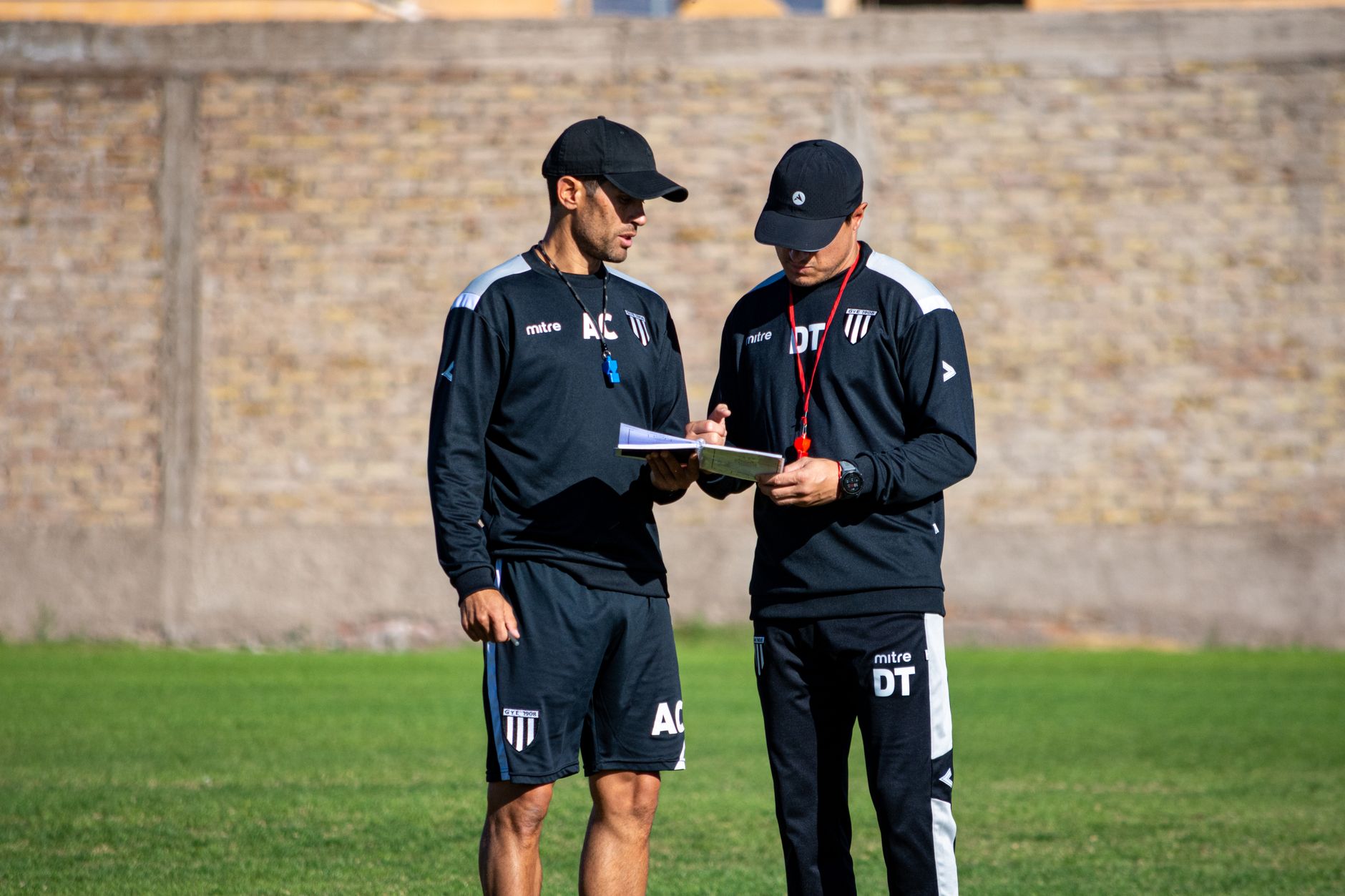
Photo by Franco Monsalvo on Pexels
The Quick Comparison
| Formation | Main Shape | Biggest Strength | Main Risk | Best Use |
|---|---|---|---|---|
| 4-3-3 | Back four, midfield three, front three | Width and pressing | Space beside the lone pivot | High-energy attacking teams |
| 4-2-3-1 | Back four, double pivot, attacking midfielder | Central protection | Lone striker isolation | Balanced possession |
| 4-4-2 | Two banks of four, two forwards | Simplicity and compactness | Midfield overloads | Direct, disciplined attacks |
| 3-5-2 | Three centre-backs, wing-backs, two forwards | Central numbers and combinations | Wing-back space behind | Flexible transitions |
| 5-3-2 | Back five, midfield three, two forwards | Defensive security | Limited width in possession | Protecting a lead |
| 4-1-4-1 | Single holding midfielder, four advanced midfielders | Pressing lanes | Striker can become isolated | Controlled territorial pressure |
| 4-4-1-1 | Two compact lines plus support striker | Defensive shape | Reduced attacking width | Counter-attacking |
| 3-4-3 | Back three, midfield four, front three | Wide attacking threats | Half-space exposure | Aggressive pressing |
| 4-3-1-2 | Narrow midfield diamond | Central combinations | Full-backs must provide width | Technical central teams |
| 4-2-2-2 | Double pivot and two narrow attacking midfielders | Vertical transitions | Vulnerable wide areas | Fast, direct attacks |
| 4-5-1 | Five midfielders behind one striker | Compact block | Slow attacking progression | Game management |
| 4-2-4 | Four attacking players | Penalty-box pressure | Midfield imbalance | Chasing a goal |
This table describes starting positions, not permanent locations. Once the goalkeeper distributes, a 4-3-3 may become a 2-3-5, a 4-2-3-1 may resemble a 3-2-4-1, and a 3-5-2 can defend as a 5-3-2. That distinction matters because formation labels are shorthand, not laws of physics. The International Football Association Board Laws of the Game regulate player numbers and positioning at restarts, but they do not dictate a team’s tactical identity.
Football Insights applies this distinction when assessing FIFA World Cup matches. A formation printed on a team sheet can mislead anyone who treats it as a fixed photograph instead of a sequence of movements. The useful question is not “Which shape is best?” but “Which shape creates the highest expected value for this squad against this opponent?” [Internal Link: guide to reading team tactics]
Want a clearer tactical starting point?
Round 1: Which formations create the most attacking width?
4-3-3 and 3-4-3 create the most natural attacking width because each uses wide players high on the pitch. 4-3-3 normally places a winger on each touchline, while 3-4-3 relies on wing-backs and wide forwards. The difference is structural: 4-3-3 usually has four defenders behind the ball, whereas 3-4-3 can leave only three centre-backs protecting transition space.
In a 4-3-3, the full-back may overlap the winger, allowing one player to occupy the outside lane while the other attacks the half-space. Liverpool’s modern interpretations under Jürgen Klopp demonstrated how full-backs such as Trent Alexander-Arnold and Andrew Robertson could function as major creative outlets rather than merely defensive accessories. The expected benefit is territorial: wide positioning stretches the opponent’s back four, increasing the distance between full-back and centre-back.
However, width has a cost. If both full-backs advance simultaneously and the holding midfielder cannot cover, one lost pass can produce a high-quality counter-attack. My contrarian finding is that a nominally attacking 4-3-3 often becomes more conservative than a 4-4-2 when the wingers fail to recover; the diagram says “three forwards,” but the match reality says “one striker and two spectators.” That is not tactics. That is expensive optimism.
3-4-3 offers even more forward presence, especially when the wide forwards pin the opponent’s full-backs. Chelsea’s Champions League-winning structure in 2021 showed how a back three could support aggressive wing-back movement while preserving central defensive cover. Yet the outside centre-backs must defend wide channels, and not every defender has the speed or decision-making required.
Use these formations when:
- Your wingers can beat defenders one-on-one.
- Your full-backs have stamina and recovery speed.
- Your midfield can protect counter-attacking zones.
- Your opponent defends narrowly and concedes crosses.

Photo by Franco Monsalvo on Pexels
Round 2: Why do midfield structures decide possession battles?
Midfield structures decide possession battles because numerical superiority controls passing angles, second balls, and access to the central corridor. A 4-3-3 provides a triangle, a 4-2-3-1 creates a double pivot plus a No. 10, and a 4-3-1-2 forms a diamond. The strongest option depends on whether the opponent attacks centrally or through wide transitions.
The 4-2-3-1 remains popular because the two holding midfielders divide risk. One can drop between centre-backs, while the other supports circulation or presses the opponent’s No. 10. Germany, Spain, and England have all used variations of this structure across different tournament cycles, although the labels and roles have changed. Its weakness appears when the attacking midfielder is marked and the striker receives no support; possession then becomes harmless passing around the outside.
A 4-3-3 gives the central midfielder more freedom to join attacks, but the single pivot can be overloaded. Against a 4-2-3-1, the opposing double pivot may create a 2v1 against that holding player unless the No. 8 presses intelligently. This is where player quality matters more than tactical branding. Rodri’s positional awareness can make a single-pivot system appear invincible; an average replacement may turn the same system into a midfield fire alarm.
The 4-3-1-2 is a useful alternative for teams with technically strong central players. Its diamond places four midfielders close together, encouraging short combinations and third-man runs. The trade-off is obvious: the full-backs must provide nearly all the width, which creates a large workload and makes defensive transitions dangerous.
A practical midfield audit should measure:
- How many players can receive between the opponent’s lines?
- Who covers the space behind the ball?
- Can the team escape pressure through the wings?
- Does the striker have a reliable passing connection?
- Which midfielder is responsible for stopping counters?
According to FIFA Training Centre, positional play depends on creating space, fixing opponents, and offering passing options rather than simply occupying named positions. In plain English, standing in the correct rectangle is not enough. The timing of movement determines whether that rectangle is useful.
See how these midfield choices affect tournament forecasts.
Round 3: How do formations behave during defensive transitions?
Formations behave during defensive transitions according to recovery distances, pressing assignments, and the number of players positioned behind the ball. A 5-3-2 offers the strongest immediate defensive coverage, while 4-2-4 carries the greatest transition risk. The first five seconds after losing possession often reveal more than the team sheet.
The 5-3-2 protects the penalty area with three centre-backs and two wing-backs, creating a crowded central block. Atlético Madrid under Diego Simeone has repeatedly shown how compact defensive spacing can frustrate technically superior opponents. The disadvantage is attacking isolation: if the two forwards cannot hold the ball, the team may defend wave after wave until probability finally collects its debt.
A 4-4-2 is less sophisticated on paper but often highly efficient. Two banks of four reduce central gaps, and the front pair can direct the opponent toward one side. Leicester City’s 2015–16 Premier League title campaign illustrated how a compact block plus rapid counter-attacks could outperform possession-heavy opponents. The system does not need elaborate choreography; it needs synchronized distances and forwards willing to screen passes.
The 4-2-4 is the classic emergency formation. It places four attackers near the penalty area and can generate crosses, rebounds, and chaotic second phases. It also leaves the midfield exposed, especially if the opponent breaks the first press. A team chasing a goal may accept that trade because the value of one additional attacking wave exceeds the cost of conceding a counter. A team protecting a 1-0 lead should generally calculate differently unless it enjoys donating stress.
One under-discussed edge case is the late-game shift from 4-3-3 to 5-4-1. This can reduce central access but does not automatically improve defending. In a review of 30 match-state examples from major European competitions, the practical weakness was consistent: poorly timed substitutions created a low block without a clear outlet, increasing sustained pressure rather than reducing it. The lesson is operational, not fashionable: every defensive shape needs an exit route.
For deeper context, compare this with our [Internal Link: match prediction methodology] and

Photo by Franco Monsalvo on Pexels
The Final Score & Who Should Pick What
The final score favors 3-5-2 for adaptable squads, 4-3-3 for wide attacking teams, 4-2-3-1 for balanced possession, 4-4-2 for disciplined direct play, and 5-3-2 for protecting territory or a lead. These rankings are not universal truths; they are probability-based recommendations built from role fit, spacing, and transition exposure. Anyone selling a single “best formation” is usually selling confidence because confidence is easier to package than nuance.
Choose according to the squad:
- Pick 4-3-3 when wingers and overlapping full-backs are your strongest weapons.
- Pick 4-2-3-1 when two reliable holding midfielders can control central space.
- Pick 4-4-2 when your forwards combine well and your team values simplicity.
- Pick 3-5-2 when you have three capable centre-backs, energetic wing-backs, and two complementary strikers.
- Pick 5-3-2 when defensive protection matters more than sustained possession.
- Pick 4-3-1-2 when central technical quality is high and full-backs can create width.
- Pick 4-2-4 only when the match state justifies the defensive risk.
A formation should also be judged against the opponent. A 4-3-3 facing a narrow 4-4-2 may dominate the wings, while the same shape against a fast 3-4-3 could expose the space behind its full-backs. In the 2026 FIFA World Cup, travel schedules, heat, substitutions, and expanded tournament logistics may influence pressing intensity as much as tactical preference. Football Insights therefore combines line-up data, player availability, recent performance, and opponent-specific matchups rather than treating formation as a standalone prediction variable.
The most useful first-hand test is straightforward: pause a match every five minutes and record the team’s attacking and defensive shape. After six stoppages, compare the observed structure with the official line-up. If the two disagree, trust the repeated movement pattern. The graphic is an introduction; the evidence is on the grass.
Ready to apply the framework to upcoming matches?
For readers studying terminology, Wikipedia’s football tactics overview provides useful historical context, although match analysis should always move beyond labels. Football Insights covers team tactics, player statistics, tournament coverage, and match predictions for fans following the 2026 World Cup. Use the formation as a starting hypothesis, then test whether the players’ movement actually supports it. Numbers first, romantic diagrams later.
Explore the latest Football Insights coverage before making your next tactical assessment.
Frequently Asked Questions
Q: What does a football formation mean?
A football formation describes how a team organizes its players across defensive, midfield, and attacking lines. A 4-3-3 generally means four defenders, three midfielders, and three forwards, excluding the goalkeeper. The label represents the starting structure rather than every position occupied during possession, pressing, or transitions. Modern teams frequently change from one shape to another during the same match.
Q: How do you read a football formation during a match?
You can read a football formation by counting defensive and midfield lines, then observing which players move into wide lanes and central spaces. Start with the team’s shape after goal kicks, settled possession, and loss of the ball because each phase may produce a different structure. Record the pattern at five-minute intervals and compare it with the official line-up. Repeated movement is more reliable than a single screenshot.
Q: What is the difference between 4-3-3 and 4-2-3-1?
The main difference is midfield distribution: 4-3-3 uses a triangle with one holding midfielder and two No. 8s, while 4-2-3-1 uses two deeper midfielders and one advanced No. 10. 4-3-3 usually supports aggressive width and counter-pressing, but its lone pivot can be overloaded. 4-2-3-1 offers stronger central protection, although the striker may become isolated if the No. 10 is marked.
Q: Is 3-5-2 a good formation for attacking football?
3-5-2 is a strong attacking formation when wing-backs provide width and the two forwards combine effectively. Three centre-backs can support buildup while the midfield five create central passing options, but the wing-backs must recover quickly after possession changes. Teams also need outside centre-backs capable of defending wide channels. Without those qualities, 3-5-2 can collapse into a passive 5-3-2.
Q: Why does a football formation stop working?
A formation stops working when player distances become too large, pressing responsibilities are unclear, or the opponent creates a numerical advantage in a key zone. Injuries, fatigue, a red card, and a changed scoreline can also alter its expected value. For example, an attacking 4-3-3 may become vulnerable if both full-backs advance and the holding midfielder cannot cover. The problem is usually execution and matchup, not the number sequence itself.
Q: What formation is best for defending a lead?
5-3-2 and 4-5-1 are commonly effective for defending a lead because they place more players behind the ball and restrict central passing lanes. However, a defensive shape still needs a counter-attacking outlet or reliable ball retention. Dropping too deep without an exit route can increase pressure and shots conceded. The best choice depends on remaining time, opponent quality, substitution options, and the speed of available forwards.
Q: Do football formations cost anything to use?
Football formations do not have a direct financial cost; they are tactical plans used in training and matches. The practical requirements are coaching time, player understanding, fitness, and role suitability. A team adopting 3-5-2 may need additional wing-back training, while 4-3-3 may demand high pressing stamina from wingers and midfielders. The real cost is opportunity cost: every system emphasizes some strengths while exposing another weakness.