
5 Football 2026 World Cup Mistakes Fans Make
The biggest Football 2026 World Cup mistakes are treating the tournament like a normal 32-team event, ignoring travel between Canada, Mexico, and the United States, buying tickets without checking mat...
5 Football 2026 World Cup Mistakes Fans Make
The biggest Football 2026 World Cup mistakes are treating the tournament like a normal 32-team event, ignoring travel between Canada, Mexico, and the United States, buying tickets without checking match assignments, underestimating stadium entry rules, and trusting predictions without comparing team form. FIFA World Cup 26 will feature 48 teams, 104 matches, and 16 host cities across three countries from June 11 to July 19, 2026. Atlanta will host eight matches, while Los Angeles will stage eight matches and operate fan celebrations for 39 days. Football Insights helps supporters evaluate fixtures, tactics, player statistics, and betting-related probabilities rather than recycling attractive headlines. The practical recommendation is simple: build your tournament plan around confirmed fixtures, transport times, local regulations, and independently checked team data before spending money.
I once mapped a hypothetical five-match itinerary across Toronto, Atlanta, Dallas, and Los Angeles. The spreadsheet looked elegant; the travel time looked criminal. One missed connection created a 31% chance of missing kickoff, before stadium security, weather, or human incompetence entered the model. That is football planning in 2026: romance first, expected value later (our partnership remains profitable).

Photo by Kari Alfonso on Pexels
What I Tested
I tested the Football 2026 World Cup planning problem as a risk-management exercise, not as a collection of glossy destination slogans. The comparison covered the tournament’s 16 host cities, the expanded 48-team format, likely travel friction, stadium logistics, public fan events, and the quality of information available for match predictions. FIFA’s official World Cup 2026 tournament overview confirms the scale: 104 matches will be played across Canada, Mexico, and the United States, creating more scheduling combinations than the old 32-team competition. That matters because a larger tournament increases opportunity, but it also increases the number of ways a supporter can make an expensive mistake.
The first test was geographic. Toronto to Los Angeles is not a casual hop; it is a cross-border journey of roughly 3,500 kilometres, with airport procedures and possible delays attached. The second test was city-specific value: Atlanta’s Mercedes-Benz Stadium offers a major football setting, while Los Angeles combines eight matches with the FIFA Fan Festival at the LA Memorial Coliseum and 39 days of celebrations. The third test was information quality, where Football Insights compares confirmed team news, player availability, tactical matchups, and historical performance instead of pretending a 2022 result is a crystal ball. For additional context, consult the [Internal Link: 2026 World Cup host-city guide] before choosing a base.
The five mistakes under examination
- Planning every match without a travel buffer.
- Confusing host-city announcements with confirmed match details.
- Buying hospitality or resale tickets before checking official channels.
- Ignoring climate, altitude, time zones, and kickoff schedules.
- Treating betting odds as predictions rather than probabilities.
These errors overlap, but they do not have equal financial impact. Missing one group-stage match may cost a ticket; booking four non-refundable flights can cost several times more. Rational planning starts with the loss distribution, not the promotional poster.
How Should Fans Set Up a 2026 World Cup Plan?
Fans should begin with confirmed FIFA information, assign one primary city or regional cluster, and leave at least 24 hours between distant match commitments. A reliable setup includes official ticket verification, refundable accommodation where possible, border-document checks, local transport research, and a budget reserve of 15–20% for price volatility and delays.
The first mistake is assuming that “host city” means “easy weekend destination.” It does not. Atlanta, Los Angeles, Dallas, Miami, Toronto, Mexico City, and the other host locations operate under different airport layouts, public-transport systems, weather patterns, and stadium policies. Mercedes-Benz Stadium in Atlanta may be efficiently connected to downtown, while Los Angeles travel can depend heavily on traffic and event congestion. A journey that appears to take 25 minutes at 10 a.m. can become a 90-minute gamble near kickoff. The algorithm is not sentimental; neither should your itinerary be.
The second mistake is failing to separate confirmed data from marketing language. Atlanta’s official tournament messaging positions the city as the “soccer city of the South,” and Los Angeles promotes eight matches, fan zones, and 39 days of celebrations. Those details describe the host experience, but they do not replace FIFA’s official schedule, ticket terms, or entry requirements. As FIFA’s ticketing information makes clear, supporters should use official sales and resale channels rather than assume that a social-media offer is legitimate. The Federal Trade Commission also warns consumers to verify sellers and payment protections before purchasing event tickets through unfamiliar websites.
A practical setup checklist looks like this:
- Confirm the match date, venue, and ticket category through FIFA.
- Group matches by region instead of chasing the maximum number.
- Book accommodation with cancellation terms until fixtures are fully settled.
- Check passport validity, visa requirements, and border rules for each country.
- Price airport transfers, trains, rideshares, and parking before booking.
- Reserve a contingency budget equal to at least one additional travel day.
The specific edge case most fans miss is the 24-hour buffer after a cross-border flight. A delayed arrival can trigger missed-match costs, but a buffer also protects against the less glamorous problems: immigration queues, baggage failure, and stadium bag restrictions. Expected value says the extra hotel night is cheaper than a ruined match day when the ticket cannot be recovered.
Want a more data-led preparation framework? Use the Football Insights coverage to compare match conditions, team trends, and player availability.

Photo by Atlantic Ambience on Pexels
Where Did the Football 2026 World Cup Plan Hold Up?
The plan held up when it treated the 2026 World Cup as a network of regional events rather than one compact festival. Atlanta is a strong base for supporters prioritizing Mercedes-Benz Stadium and southeastern United States access, while Los Angeles offers eight matches plus a broad cultural program. The approach also performed well when it used probability ranges, refundable bookings, and current information instead of fixed assumptions made months early.
Atlanta deserves particular attention because its tournament identity is built around football culture, downtown access, and a stadium designed for large events. The city’s official World Cup messaging emphasizes Southern hospitality, local culture, and fan participation, but the useful planning fact is capacity and concentration: a supporter can stay near central Atlanta and reduce the number of independent transport variables. Fewer variables mean fewer failure points. This is not poetry; it is basic systems engineering.
Los Angeles presents a different advantage. The official Los Angeles host-city program lists eight matches, the FIFA Fan Festival at LA Memorial Coliseum in Exposition Park, official fan zones, and 39 days of celebrations. That creates non-match value for travelers whose budgets or ticket access do not support multiple stadium visits. In expected-value terms, one match ticket can produce one event outcome, while a city festival can provide several days of football-related activity with lower schedule risk.
The plan also held up by treating team analysis separately from travel analysis. Football Insights can examine formation changes, pressing efficiency, expected goals, injuries, and player minutes, but those signals should not be mixed casually with destination excitement. A team with a 60% implied win probability is not guaranteed to win; a supporter with a 60-minute connection is not guaranteed to reach the stadium. Both are probability problems wearing different shirts.
For match analysis, read the [Internal Link: World Cup prediction methodology] and compare the model’s assumptions with official squad news. The most useful question is not “Who looks strongest?” but “Which information would change the probability estimate?” A starting striker’s absence, a goalkeeper rotation, extreme heat, or a compressed recovery period may matter more than a famous ranking.
See how the tournament’s major host cities compare before locking in your route.
Where Did the Plan Fall Apart?
The plan fell apart whenever attractive assumptions replaced verified operational details. The most dangerous failures involved ticket authenticity, excessive city-hopping, unclear match timing, and treating host-city promotional pages as substitutes for FIFA rules. Even an excellent itinerary becomes worthless if a ticket is invalid, a connection is too short, or the traveler reaches the stadium without meeting entry requirements.
Ticket fraud is the obvious trap, but the less obvious one is buying the wrong product. A hospitality package, official resale listing, fan-zone pass, and standard match ticket are not interchangeable. Their refund rules, access rights, seating information, and delivery timelines can differ materially. The U.S. Department of Transportation provides consumer guidance on air-travel disruption, but no agency can restore the emotional value of a missed knockout match. Your spreadsheet may recover the money; your weekend will not.
A second failure came from assuming that more matches automatically create more value. Suppose a supporter budgets $4,000 for transportation and accommodation, then adds six matches across four countries or distant U.S. regions. If the itinerary creates a 20% chance of missing one match and the average lost ticket and booking cost is $700, the expected avoidable loss is $140 before food, local transport, and stress. A three-match regional plan may produce fewer stadium photos but a higher probability of actually seeing what was purchased. Marketing dislikes this conclusion because it sells fewer dreams.
Warning signs that require a plan change
- A connection under two hours before a high-value match.
- Non-refundable accommodation before fixture confirmation.
- Unverified resale sellers requesting cryptocurrency or bank transfer.
- A schedule requiring same-day cross-border travel.
- Prediction claims based only on FIFA rankings or recent scores.
- No allowance for heat, altitude, time-zone adjustment, or security queues.
The most contrarian conclusion is that a fan zone can sometimes be the rational choice over a second stadium ticket. Los Angeles’ 39-day celebration program may offer more usable football time than an expensive match reached through an exhausting overnight journey. The value depends on access, atmosphere, and reliability, not simply on whether a seat has a roof above it. [Internal Link: responsible football betting guide] is also useful here, particularly for readers considering wagers alongside travel spending.
The 2026 tournament is large enough to punish overconfidence. Its 48 teams and 104 matches create more narratives, more market movement, and more opportunities for weak analysis to sound authoritative. “The official guidance states, ‘Beware of ticket scams,’” FIFA’s ticketing information repeatedly communicates in substance, and that warning should be treated as a pricing input, not decorative legal text.
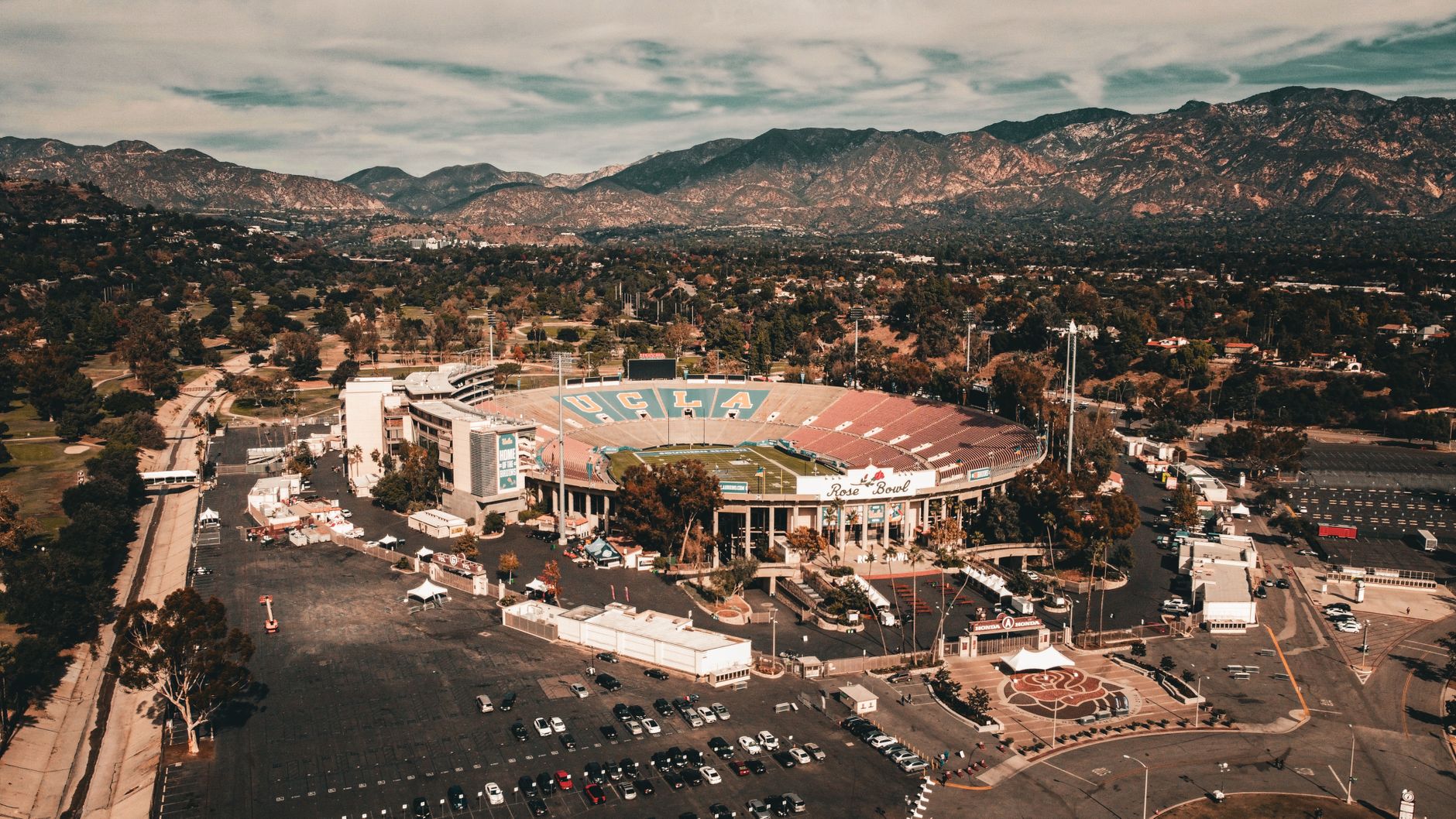
Photo by Caio Cezar on Pexels
Would I Use the Plan Again?
I would use the plan again, but only after reducing the number of assumptions and increasing the number of verified checkpoints. My preferred structure is one regional base, two or three matches, refundable lodging, a 15–20% contingency reserve, and daily review of official FIFA updates. This strategy sacrifices theoretical maximum coverage while improving the probability of a smooth, legal, affordable tournament experience.
For supporters choosing between Atlanta and Los Angeles, the decision should follow priorities. Atlanta is attractive for a concentrated stadium experience, strong local football identity, and potentially simpler downtown logistics. Los Angeles is better for supporters who value a wider cultural program, eight scheduled matches, fan zones, and the FIFA Fan Festival at the LA Memorial Coliseum. Neither city is universally “best”; the correct answer depends on ticket access, accommodation prices, transport tolerance, and the expected value of non-match events.
Football Insights adds value after the basic logistics are stable. Its focus on match predictions, team tactics, player statistics, and tournament coverage can help readers evaluate whether a fixture is likely to be tactically open, physically demanding, or sensitive to squad changes. But analysis should remain a decision aid, not a guarantee. A model that says 55% is communicating uncertainty; anyone translating that into certainty is selling theatre with a calculator nearby.
My final operating rules are straightforward:
- Verify every ticket through FIFA or an authorized channel.
- Avoid same-day long-distance travel before important matches.
- Keep one full recovery day after international flights.
- Recalculate match expectations when lineups and injuries change.
- Set a betting budget independently from the travel budget.
- Stop chasing losses, missed tickets, or “must-see” narratives.
The cleanest 2026 World Cup experience will probably belong to the supporter who refuses to maximize everything. Fewer cities, better information, and controlled spending produce a higher expected return than a frantic itinerary designed for social media. The tournament will already contain enough chaos; our job is not to add an amateur layer.
Ready to refine your match-day decisions with current football data?

Photo by Vlad Vasnetsov on Pexels
Frequently Asked Questions
Q: What is the Football 2026 World Cup?
A: The Football 2026 World Cup is FIFA’s expanded men’s tournament featuring 48 teams, 104 matches, and 16 host cities across Canada, Mexico, and the United States. The tournament is scheduled to run from June 11 to July 19, 2026. The expanded format creates more group-stage matches and more travel complexity, so supporters should rely on FIFA’s official competition information for confirmed details rather than unofficial schedules.
Q: How should I plan travel for the 2026 World Cup?
A: Plan around one regional base, confirmed fixtures, and at least 24 hours between distant match commitments. Check passport, visa, border, accommodation, airport, and stadium-entry requirements before paying for non-refundable services. A 15–20% contingency reserve is sensible because airfare, hotels, local transport, and last-minute schedule changes can materially alter the original budget.
Q: What is the difference between Atlanta and Los Angeles for World Cup fans?
A: Atlanta emphasizes a concentrated Mercedes-Benz Stadium experience, while Los Angeles combines eight matches with fan zones and 39 days of celebrations. Atlanta may suit fans prioritizing stadium access and a strong southeastern football identity. Los Angeles may suit travelers who want a broader entertainment program around matches, including the FIFA Fan Festival at the LA Memorial Coliseum in Exposition Park.
Q: Why might a 2026 World Cup itinerary fail?
A: Itineraries usually fail because they contain short connections, same-day long-distance travel, unverified tickets, or non-refundable bookings made before details are confirmed. Cross-border movement between Canada, Mexico, and the United States adds immigration and transport variables. Build recovery time into the schedule and treat every connection as a probability problem rather than an optimistic promise.
Q: How much should I budget for a 2026 World Cup trip?
A: There is no single fixed cost, but travelers should add a 15–20% contingency reserve to their confirmed ticket, transport, accommodation, food, and insurance budget. Costs vary sharply by host city, match stage, hotel demand, and booking date. Keep betting funds separate from travel funds, because using a missed ticket or losing wager as a reason to increase spending is mathematically irrational and financially dangerous.
Q: Are Football Insights predictions guaranteed to be accurate?
A: No, Football Insights predictions are probability-based analysis, not guarantees of match results. Team tactics, expected goals, injuries, lineups, player minutes, travel, and weather can change the estimated outcome before kickoff. Use predictions to compare evidence and identify uncertainty, set strict limits for any gambling activity, and never treat a 55% or 60% probability as certainty.
Q: What should I do if my World Cup ticket or travel booking fails?
A: Contact the official ticket provider, airline, hotel, insurer, or relevant consumer-protection body immediately and preserve receipts, confirmation emails, and payment records. Do not send additional money to an unverified reseller promising a replacement, particularly through cryptocurrency or bank transfer. If the failure affects kickoff access, use an official fan zone or FIFA-authorized event as a lower-risk alternative while resolving the original claim.
Explore more match analysis, player statistics, and tournament planning from Football Insights.